

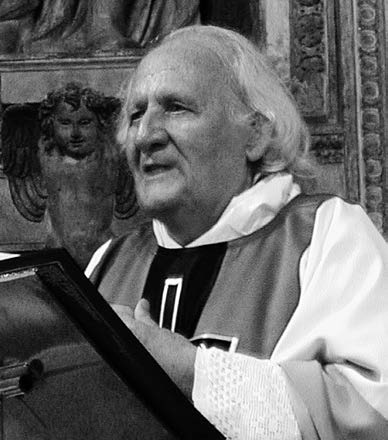
In the church of the Canepanova convent in Pavia, Father Ruggeri preached many homilies during Sunday Mass. He did so with pleasure because, as he told his friend and fellow friar Father Fabbretti, from his first sermon in his hometown church, delivered on the day of his priestly ordination: “I felt that preaching would bring me many great satisfactions” (see “Soltanto un fiore”). The surviving homilies are those preached from 1980 onwards, collected in notebooks preserved in the Historical Archives of the Province of Saint Anthony of the Friars Minor in Milan.
Grouped according to the cycle of liturgical years (A, B, and C), their seasons (Advent and Christmas, Lent and Easter, Ordinary Time), and for different occasions (such as triduums and missionary days), the texts reveal the process used by the father: after establishing a framework, he asked his secretary, Carmen, for a faithful transcription of the development he had given to the framework during the homily; He subsequently used the same text several times, revising it, as evidenced by the frequent handwritten corrections. His notes and transcriptions almost always bear a title; they also follow a tripartite structure—with introduction, theme developed, conclusions—which also emerges in several handwritten notes, drafted as a framework for his lectures.
He drew his most important references from the Gospels, which he enriched with quotations from authors dear to him, especially Saint Augustine, Kierkegaard, and Dostoevsky. In them, he described himself as a priest, a friar, and a man, or a Christian, a friar, and a priest, but never as an artist. The most recurring theme was the love that binds Christ to humanity and vice versa, that builds brotherhood and strengthens the family, that allows forgiveness and enables us to be poor in freedom. He often recalled the value of light. In a homily reported here, delivered in the church he designed in Rho (Milan), he linked the event of the Resurrection to “the light that bursts radiant and peaceful from the large windows and fills the entire space.”
He never distanced himself from those before him; rather, he addressed his listeners as “dear friends,” in a Franciscan harmony of shared destiny, sustained by a joyful spirit open to the future, but also by a clear-eyed gaze on the never-neglected harshness of life.
For the feast of St. Francis of Assisi
Cycle A of the liturgical year – October 4
Today is the feast of Saint Francis of Assisi, patron saint of Italy, founder of the Friars Minor, better known as the Franciscans. This morning I want to talk to you about him, even though it is very difficult. And it is difficult for at least two reasons. Because we run the risk of talking about him just for the sake of talking about him, that is, out of curiosity or aesthetic pleasure; but once the discussion is over, nothing changes in our lives.
Then there is the danger of reducing Saint Francis of Assisi to a romantic saint, a lover of nature who speaks to flowers, birds, fire, and clouds, as children and poets do.
The poor man of Assisi, in the guise of a lovable and gentle troubadour, can certainly inspire intellectual delight. Placed within the framework of the Little Flowers, he undoubtedly attracts and pleases.
But, dear friends, are these perhaps the most important and characteristic aspects of Saint Francis, from which his message comes to us? To us, dissatisfied, disappointed, and distrustful of ourselves, of society, and of life? To us, deeply concerned about our future and that of our children? A tomorrow we would like to be different: more serene, more just, more religious, to live in joy, in the perfect happiness and freedom of the children of God.
Friends, Saint Francis was one of these free men, one who made himself free—let us note this—he made himself free to liberate. And from what did Saint Francis make himself free?
Francis freed himself: from the allure of material things, from the frenzy of pleasure, of entertainment, from the greed for possessions, from the thirst for money and gain. Not in words, friends, but in deeds. Remember? The son of a wealthy merchant, an intelligent and charming young man, he voluntarily renounced everything for the love of God. And without shouting at anyone, without condemning anyone, he gives his goods to the poor, so that they too may have sufficient food, security, and joy, and may more easily feel loved by God and men. Friends, remember! The greatest example Francis achieved was that of “feeling joyfully a son of God” and being able to make all men feel it. The Canticle of the Creatures that you all know, “Praised be you, my Lord, through Brother Sun, through Brother Fire, through Sister Water, through our Mother Earth…”, is the hymn to the joy and freedom of life, Francis’s thanksgiving for having restored, or attempted to restore, the world to the state of innocence as God had created man at the beginning of time and placed him in the earthly paradise.
This was Francis for his time. Those who knew him closely and lived with him for many years did not hesitate to call him an alter Christus, “the Christ who returns to walk the streets of the world,” “a man made prayer.” In other words: “a being totally, profoundly, intensely of God.”
We live in difficult times today! Consumerism sickens us and overwhelms us. We sometimes strive, with such heavy breathing, to have many, many things that make us happy.
We are no longer satisfied with just bread and a sufficient roof; we want a car, a television, more clothes for every fashion and season; entertainment to enjoy and, above all, to forget.
And there are also those who desire things that are not good for the body and soul: drugs, for example, and those who strive to have a greater or lesser portion of power, too often forgetting that joy lies not in having many material things, but in being good. Happiness and peace are friendship with the Lord; happiness lies in loving one another and loving our neighbors.
This is what Francis of Assisi tells and teaches us. In religious history, Francis of Assisi is called “the poor man of Christ,” a small man, a poor man, but one who possesses marvelous and unimaginable riches to give to all, to make all people happy. These treasures are perfect joy, freedom, peace of heart, the love of people for one another and for creation. Treasures we all hunger for and which we absolutely must rediscover as soon as possible if we do not want to be irretrievably lost.
Friends, a few decades ago, I had the task and the good fortune of placing his face on the posters you saw at the entrances of the church and on the walls of our city. The poster also contains a very short phrase: Francis, a face for man. Yes, Francis, give us your face, your eyes, your love, your perfect joy. I, your son, need it so much, so desperately. These devoted friends of yours, present here to celebrate the memory of your blessed passing from earth to heaven, need it so much. And you, Francis, take us all by the hand and accompany us, quietly, throughout our lives, to console ourselves always, in the consolation of God and in the consolation of our fellow men, whom He will allow us to meet on our earthly journey.
For the feast of St. Francis
Cycle B of the liturgical year – October 4
Francis of Assisi was a most fruitful man, kind in appearance, never indolent or haughty. He was charming, beautiful, and glorious in his innocence, in the simplicity of his words, in the purity of his heart, in his love of God, in his fraternal charity, in his courtesy, and in his angelic countenance. He was gentle in character, calm in nature, affable in speech, cautious in admonition, faithful to his duty and to friendship, shrewd in counsel, effective in action, amiable to all. Of a serene mind, gentle in spirit, constant in prayer, and full of enthusiasm in everything. Tenacious in his resolutions, steadfast in virtue, persevering in grace, quick to forgive, slow to anger, fervent in mind, sharp in discussion, prudent in decision-making, and of great simplicity. Stern with himself, indulgent with others. Dear friends, this is how his first biographer, Thomas of Celano, described Francis of Assisi. Today we celebrate his feast day and the beginning of the eighth centenary of his birth. After Holy Mass, with a moving rite, we will relive his blessed passing, that is, the last moments of his earthly life, his encounter with “sister bodily death,” as he called her, which gave him birth to eternal life, opening wide the gates of Heaven for him.
In this mystical moment, as we reflect on his figure and his life, I would like to invite you to reflect on two aspects that are particularly rich in meaning.
I
Saint Francis was a free man, a man who made himself free to free others. He freed himself from riches and the thirst for power and profit. The son of a wealthy merchant from Assisi, at a very young age, he donated all his possessions to the poor and dedicated himself to the service of God and his brothers, especially the poor, lepers, the marginalized, and the excluded. And without shouting at anyone! Without condemning anyone! Class struggles and temporal revolutions, which too often sow hatred and division, never interested him.
Friends, there was no Franciscan revolution in the current sense of the word, unless by revolution we mean a return to a simple, evangelical life, to a gospel lived “sine glossa,” spontaneously and in perfect joy, with the freedom of the children of God. Francis was the supreme example of nonviolence, not only because, in a society armed to the teeth like the one in which he lived, he commanded his friars and all his followers not to carry weapons; not only because, in the century of the Crusades (these often justified massacres), he went unarmed to the Sultan, to speak to him about Christ and the Gospel. And the Sultan was so struck by God’s love that he would have wanted to convert to Christianity, had Francis not told him: “No, wait, because your subjects, who are Muslim, could kill you.”
II
Dialogue with non-Christians, dialogue with those who believe in other values. But don’t listen, friends, to current events, let’s not talk about modernity, which is a colloquial phrase; rather, to current events, to the meaning of these facts: nonviolence as a norm of behavior, of life, respect for man, for his political and religious ideas, for his inviolability. Francis’s greatest example was that of not condemning anything or anyone, because condemning someone is already an act of violence, but of being totally and intensely a man of God among men. And precisely because he was a man full of God, he was, like no other, a man among men, and like no other he loved and benefited man, all men, so much so that the poet Ungaretti, shortly before his death, said to one of my brothers: “After he lived on earth, life, for us too, became easier and happier.”
III
Friends, Francis teaches us so many things! He teaches us how we must pray with a detached heart and a luminous soul. He teaches us how simplicity is a strength capable of leading us to the essential, to the most spontaneous and familiar joys of life, because we don’t need so many things. He teaches us how pain and toil are less burdensome and more bearable when we look at the crucifix and the sky. Above all, he teaches us how the highest purpose of life is achieved in loving God with all our heart and in serving our brothers and sisters, especially the poorest and most abandoned. Finally, he teaches us how only Jesus and the Holy Gospel hold the secret to making us better and happier.
Dear friends, let us say to Francis: “You, who brought Christ closer to your time, help us to bring Christ closer to the men of our time. Help us! These men of the twentieth century await you with great anxiety, even if many of them do not realize it. You, O Francis, who carried in your heart, like no other, the struggles and aspirations of your contemporaries, help us, with our hearts close to the heart of Jesus, to embrace the tormented and joyful events of the men of our time; the difficult social, economic, and political problems; the problems of culture and justice; all the sufferings of today’s man, his doubts, his denials, his confusions, his tensions, his restlessness, his thirst. Help us to resolve everything in an evangelical way, so that Christ may be the way, the truth, and the life, and the joy and freedom for the men of our time. We ask this of you this evening, Francis, with great trust, we, your friends and devotees, certain that you will answer us, you who have always been good, and you have always loved us and have always hastened to bring help to all those who have turned to you.”
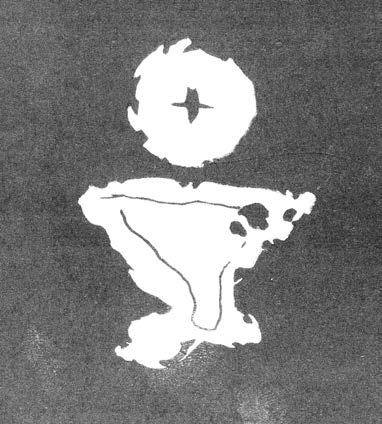
Sacred image, print on paper, Pavia, 1977
Christmas
Cycle A of the liturgical year – Morning Mass
“I bring you good news of great joy: today your Savior is born.”
Dear friends, as I do every year, I repeat these words of the angels to the shepherds, albeit with ever greater anxiety. Why? You might ask. Friends, how many times have we heard them, and what has changed in the world and in our lives? Let us look around us: what is the world like? Always restless, dissatisfied, and aggressive. What is our life like? Often sad, empty, agitated, discontented. We are worried and discontented about so many things. And perhaps, sometimes, we don’t even know why. What, then, can change this Christmas? This message of joy and peace?
Dear friends, I know: you carry within you the heaviness of life! But you must not think of me as a stranger. In my heart are the same sufferings and disappointments as you. I am a priest, a friar, and a man. Misunderstanding, ingratitude, and weariness are our daily bread; I suffer them too. Yet this morning I take courage and tell you: “There’s good news!” Today is Christmas, Jesus is born, the Redeemer is born, humanity is overwhelmed by a flow of goodness that, even if it’s a one-day thing, I must enjoy and breathe in, to breathe again.
Dear friends, Jesus comes because he loves us. There’s a flow of goodness in humanity today. Christmas Day is different from other days. Let’s enjoy these moments and prolong them. How can we prolong the joy of Christmas in our lives? I’m not giving you theological suggestions, but practical ones. I think it’s first of all necessary to understand the lifestyle of Baby Jesus: spontaneity, love for small, simple things, and, as I said last night, possessing the ability to be enchanted by these things, as we did as children.
Friends, look at how Jesus was born, from whom and where! He rejected pomp, palaces, ceremonies, even comforts. He was born in the most discreet, most secluded, poorest, and most beautiful place. Yes, the most beautiful, because in the Bethlehem cave there was only the scant warmth of straw and animals, but how much warmth in the hearts of Mary, Joseph, and the shepherds! Here it is: to restore our taste for simple things, for spontaneous things, small but true, even if they seem insignificant. It is the first gift of Holy Christmas.
Dear friends, I always think back to my childhood, the Christmases of my childhood. Few things, small gifts, but so much human warmth! And the holidays were spent with family, because otherwise they weren’t holidays. How peaceful and happy we were! We despaired less. Why? Because, even if there were hardships, illnesses, and corruption outside, within there was the light of faith and honesty. A faith and honesty that weren’t swept away because others lived badly. I can, I must remain honest, even in a dishonest world. But above all, there was more love. A love made of works, sacrifices, and prayer. How many prayers have I recited before the nativity scene, before the crib of Baby Jesus. Dear friends, here’s the plan for a “Merry Christmas”: to return to childhood in spirit and to love one another. This is my wish for you and your loved ones.
The Resurrection: A People Made New by the Light of Christ
Cycle A of the liturgical year
Tonight I want to begin our reflection by observing this new church hall where we gather to listen to the word of God and celebrate the Eucharist in celebration!
What, dear friends, is the hallmark of this church? It is the radiant and peaceful light that pours from the large windows, filling the entire space, and every corner of the hall becomes a song of light and color. Above the sanctuary shines the solar disk, Christ. In the baptistery, a forest light flows, where a spring of living water flows that purifies and renews. In the Eucharistic chapel, there is an atmosphere of warm intimacy; in the penitential area, reflections open the heart to trust and forgiveness. And above, in the large rose window, amidst the blue tones of the sky, a white figure, dreamed of in the heart, a candid figure of a woman: our Mother, the Virgin Mary.
You will ask me: “How come you created our church in light?” The answer comes to me from the mystery we are preparing to celebrate: Easter. It seems clear that the focal point of the Easter event we wish to fully relive is light. Remember, friends, the lyrical impetus of the Easter Proclamation?
“Let the earth rejoice, irradiated by such radiance, and, enveloped in the splendor of the eternal King, may it understand that it has been freed from the darkness that envelops the entire world.” Friends, the risen Christ is light, our light, the light of the world. Drawing from the new blessed fire the spark that will light all the lights of your church on Holy Saturday is an expressive gesture of this radiant truth: “The risen Christ is the source of light,” and light means wisdom, truth, justice, freedom; light means love, peace, happiness.
Dear friends, we are rather accustomed to thinking of the word of Christ as “our light”; to thinking of the Lord Jesus as a teacher of truth, through his teachings. “I am the way, the truth, and the life.” And rightly so. But remember: Easter makes Christ a shining beacon, not so much for the words with which He, resurrected, will validate the still wavering, trembling, and terrified faith of the fortunate disciples who had a vision and conversation with Him, risen, but for the unique, astonishing, and groundbreaking fact of His glorious resurrection.
“How is it, how is it,” we ask, “that the risen Christ is a source of light?” He is light, first and foremost, because it is proof, proof that He is God, proof that He is the Messiah, the Redeemer of the world. “If Christ had not risen, our faith would be in vain.” The cry of Thomas as he touches Jesus’ wounds: “My Lord and my God!” is the first ray of light that illuminates with certainty the faith of the nascent Church, our faith.
From that day on, for the Apostles, Christ is their Lord, Christ is our Lord, the Lord of all men.
The risen Christ is light for another reason: because he reveals to humanity our eternal destiny. Saint Paul writes to the Christians of Corinth: “Christ is risen from the dead, the firstfruits of those who sleep the sleep of death.” Once Christ’s tomb is opened, all the others will open. You see, friends, how Easter is a light that spreads beyond the span of time and reaches the threshold of eternity.
Finally, the risen Christ is also light for this present life of ours. By announcing an eternal destiny to humanity, Christ proposes a new form of life. Surrexit Dominus vere! Christ is truly risen! The Church will proclaim this on Easter Sunday. So, friends, so must we say of the Christian who has celebrated Easter. Surrexit vere. Yes, he is truly risen! He has risen from sin to the life of God! He rose from selfishness, wickedness, and mediocrity. He rose to a new life.
Dear friends, when a child is born, we say he “comes to the light.” Surely you too have visited some caves, there are some in Italy too: stupendous, marvelous, exceptional. They are full of stalactites and stalagmites, reminiscent of enchanted forests or Gothic cathedrals. But these places are dark, and precisely because they lack light, you too will have noticed that there is not a single flower, not a single tree, not even a blade of grass, perhaps a few patches of moss, precisely because the light is missing. You see: light is the source of life, both physical and spiritual.
This is why Christians were called “the enlightened,” because they were filled with the light of Christ. “The Lord,” says St. Peter, “has called us to his marvelous light.” We, if we are true Christians, must shine. “Let your light shine!” The Christian’s Easter commitment is this: to bring the light of the risen Christ to the world. To all! Friends, let us pray that our torches never go out. This is the meaning of the baptismal promises we will renew at the Easter Vigil. And may the risen Lord also grant us the grace to be able to say with the great Newman at the end of our earthly life: “I have walked much. I have toiled and suffered much, but I have never sinned against the light.”
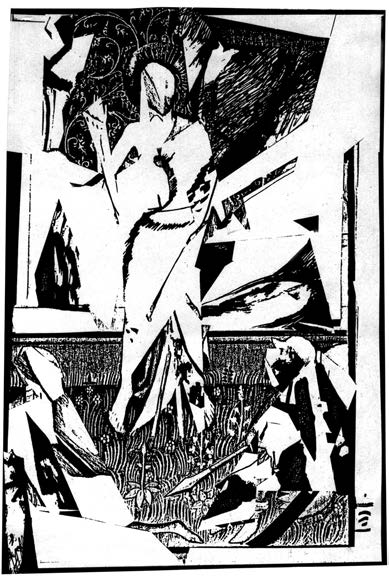
Resurrection, mixed media on paper, Pavia, 1990s
Easter
Cycle A of the liturgical year
Easter! It’s Easter, friends! Christ is truly, truly risen. Alleluia! He is risen not only in the opinion and then in the subjective persuasion of the apostles and of the first Christian community that originated from Him, but he is risen personally, historically, always He, the Jesus of the Gospel. He is risen in a radically new state of life, which preserves but transcends the state of present human existence, sublimating its fullness, glory, power, and spirituality. Christ is risen!
To Him we pay homage with our faith and our exultation. Alleluia! And then, friends, let us allow the light, the virtue of Easter, to flow over our troubled humanity, as the blessed hymn of the Exultet announced and almost experienced it tonight. For Christ’s resurrection is not only His personal triumph over death, but it is also the beginning of our salvation and our resurrection. With Christ, every Christian is resurrected, must be resurrected. To rise from sin, which is a poisoned source of life. To rise with a commitment, an effort at moral and spiritual renewal. It doesn’t matter, friends, if the experience of the transience and wickedness of human forces daily disappoints our fragile hopes for a better tomorrow. It seems there is little to hope for from men. Nor does it matter if progress and well-being seem to bring to humanity not elevation, riches of moral and spiritual values, serenity, joy, and security in life, but worry, torment, dissatisfaction, boredom. It doesn’t matter, friends! Because a new, original, inexhaustible source of life has been infused into the world today by the risen Christ, and this power is at work in everyone, especially in those who hear his word, welcome his spirit, and compose his mystical body. Dear friends, perhaps the cross with which Jesus presents himself makes us distrustful and fearful, oriented as we are toward the elimination of sacrifice, discipline, and duty. But to those who welcome the risen Lord, He reveals the secret of His cross, which is light, strength, freedom, and peace. It is indeed a sacrifice, but for the moral greatness of man and for the supremacy of love that does not disappoint. I hope that the risen Christ will be understood, loved, and followed by you in this way. As a stimulus to good intentions, as a comfort to the poor, the sick, and the disheartened, who are still so numerous today.
Happy Easter to all!
The glory of God
Cycle A of the liturgical year – John 17:1-11, Seventh Sunday after Easter
The group of men and women, including Mary and the apostles, gathered, as tradition dictates, in the Upper Room, the same room where, a few weeks earlier, Jesus had instituted the Eucharist and pronounced the words of the Gospel we have just read. This group is the nucleus of the nascent Church, the seed of the new people of God. This praying community has behind it the memory of the Lord’s cross, his resurrection, and his apparitions. And it has before it the times and spaces determined by the future history of humanity.
The Holy Spirit has not yet descended. He will come upon them on the day of Pentecost in the form of wind and fire. But this group, gathered in the Upper Room, knows that Jesus has already been glorified and that its task on earth is to bear witness to the glory with which the Father has glorified him. What is this glory with which Jesus has been glorified and for which it thanks the Father, in ardent prayer, yet at times mysterious and inaccessible to our human capacities?
Friends, to lift the veil between us and the Lord’s Prayer, it is first necessary to explain the meaning of the frequently repeated word “glory.” What is the glory of God? According to the Bible and the full manifestation of this word on the lips of the Lord, the “glory of God” is the manifestation of his omnipotent love for his creatures.
The glory of God is not even His works considered in themselves: the universe, the depths of space, the creatures that populate the earth, and all the infinite spaces of the cosmos. Certainly, they speak to us of God, of his glory. Cæli enarrant gloria Dei. But the “glory of God” to which Jesus refers in this prayer is the glory of God who creates things and loves them because he sees that they are good. The glory of God is that which created man and woman and loves them and wants them to love each other.
Let us think about it, friends: the great reality is not that God created us, but that he created us to love us with an immense love, one that surpasses all our merits and expectations. The glory of God breaks the chains of the oppressed, gives freedom to men from all oppression, blesses children, gives strength to the little in spirit, forgiveness to sinners, condemns all violence and arrogance. This is the glory of God; this is the river of his love that flows through creation and enlivens all things with a life different from the one the world knows.
In contrast, clarifying this great truth of the Christian message, there is the “glory of the world.” The glory of the world! It is the Spirit of evil, of darkness, that rises up against God and against the children of God. It is the sinister and baleful force that from the beginning has attempted to ruin God’s work. The Bible speaks of it frequently from its very first pages. Remember when men wanted to build the Tower of Babel, a tower that would allow them to scale the heavens. The Bible notes that those men sought glory. But we know they sought their own glory, not the love of God, of creation, or of their fellow men. They wanted to seek glory as self-affirmation, as a sign of power, might, and dominion.
This is the gloria mundi, the affirmation of oneself, of one’s strength, of one’s selfishness, of one’s pleasure, of one’s prestige. And to achieve these goals, what bribes are paid and demanded! History bears macabre witness to this. Think of Hitler and Stalin, two contemporary names, but how many, how many such names crowd the pages of human history! Famous men, powerful and cruel, who, with a nod, sent others to their deaths, men of power who have atomic bombs at their disposal and, with the push of a button, can destroy the earth. Here is the ‘glory of the world,’ never gone, ever reborn. We know the thousand forms of this glory according to man; we feel its attraction, I would say its longing within us.
Yes, friends. This glory can contaminate us, infect us, assail us. Because each of us, within a more limited sphere, seeks our own glory. And we all know from experience that seeking ‘our glory’ almost always means somehow causing others to weep. Let us examine our lives carefully, friends; let us not shy away from this confrontation with our conscience, with our responsibilities. When we have sought self-affirmation, our pleasures, our interests, we have always sown disappointment, sadness, tears, and despair around us, in the hearts of the little ones, of our loved ones, of those who perhaps loved us most. Thus, the glory of man inexorably becomes the distortion of man, and makes him not a brother, not a friend, but an oppressor, an exploiter, perhaps the executioner of his fellow man. Homo homini lupus.
If we are Christians, that is, men of heart, animated by the laws of the heart, which are the fruit of the Gospel, we seek the glory of God spoken of.
to Jesus when he says: “The hour has come, glorify your Son.”
We have now understood what this glorification to which the Lord refers is. It is not his resurrection, but his crucifixion, that is, the greatest act, the supreme gesture of Jesus’ love for humanity, a love that led him to offer his life for our salvation. “There is no greater love than to give one’s life for a loved one.” He, Jesus, died for us. Friends, to know if we are Christians, the essential thing is not whether we come to Mass, whether we recite prayers, whether we receive communion. Certainly, these are good works, to be done, but the essential thing is to confront ourselves with the Lord’s cross, to see if we have his heart, whether in our lives we always give primacy to love. As Saint Augustine said: “Love, love God and neighbor, and then do whatever you want.”
The evangelical measure of love
Cycle A of the liturgical year – Matthew 5:38-48, Seventh Sunday in Ordinary Time
Dear friends, today we attempt to measure the progress made by Christian doctrine to reach, under the wise guidance of God, its perfection. This concerns the cornerstone of the Gospel: “love of neighbor.” In Leviticus, a book of the Old Testament, the commandment reads like this: “Love your neighbor’s son as yourself.” As you can see, our gaze does not yet transcend the boundaries of our homeland; our neighbor is our family member, our compatriot. The expression “as yourself,” on the other hand, is already very demanding: “it penetrates the most hidden recesses of the heart, where man loves himself. It leaves no excuse, no escape for selfishness” (Kierkegaard). We could say it has the same power as the instinct for self-preservation. It breaks the shell of this inextricable cocoon in which I tend to enclose myself: my “I.” It prevents me from preferring myself to another. If I have a hundred, fifty for me, fifty for him.
Yet, the Gospel makes yet another leap forward, and what a leap! First, regarding the recipients of love. Whom should I love? Only my family, my fellow citizens? No! Every man. Because every man is my brother, my neighbor. So I must love not only the good, the honest, and the polite, those who respect me, but also the unpleasant, the annoying, those who think differently from me.
And we, dear friends, come into contact with these people every day, in the family or at work, in the political and social spheres. Relationships are not always easy; everyone has their own character, their own mentality. And sometimes we think we have a monopoly on the truth! We must love, or at least understand and tolerate.
There is also another point worthy of our reflection. Remember the episode from the Holy Gospel. When a lawyer asked Jesus, “Who is my neighbor?” the Lord, with the parable of the Good Samaritan, responded by reversing the Pharisee’s question. He said to him: “Who was closest, kindest to the man who, attacked by robbers, lay dying on the road?” The answer was obvious. “The kindest was the Samaritan who stopped and cared for the wounded man.” You see, friends, and this is an important detail: we must not ask those who need our help and our love to command us and come to us if they want to enjoy our love.
We must draw near to the poor, the needy, go to them wherever they are. To those who lack material goods and to those who lack human and spiritual values. Kierkegaard wrote: “Everyone knows their neighbor, but from a certain distance… And, seen from a distance, their neighbor is a shadow that, like a fantasy, fleetingly appears in our minds.” Often we fail to discover the neighbor who is close to us, perhaps in our own family.
Another very important instruction, which brings the precept of love to perfection and fullness. Our neighbor is also our enemy—those who wish me ill and who do me harm, those who envy my good, those who want to see me suffer, those who slander me, those who hinder me on my path, even those who stab me in the back, those who deceive me, those who take advantage of my goodness, my good faith. How should we respond? With forgiveness, with love! Jesus says: the Christian “is not overcome by evil, but overcomes evil with good” (Rom. 12:21). Under no circumstances can a lack of love for one’s enemy be justified, not even by appealing to injustice. Love without hoping for reciprocation; rather, accept hostility without resistance: bless and do good to those who harm you. Don Orione said: “Do good always, good to everyone, evil to no one.”
And regarding the measure of love, you have heard: Jesus points us to the example of the Father and His own. “In loving your neighbor, be like children of your heavenly Father, who makes his sun rise on the good and the wicked, and sends rain on the just and the unjust.”
And in proposing himself as an example of true love, he says: “Love one another as I have loved you.” That “as” is supremely demanding. He gave everything: he sacrificed his life. This goes far beyond human and fraternal understanding. It pushes us to the point of ultimate sacrifice.
Love of neighbor is not a law by which one can say: “this far and that’s it,” or “I don’t harm him, but let him stay away.” Certainly, dear friends, we find ourselves on the verge of a divine perfection, which some saints expressed thus: “The measure of love is to love without measure.” A conquest made up of small daily victories over the family and work environments in which we live. A victory that is possible only to those who have the spirit of God and the heart of Jesus, and who pray.
In memory of the deceased
Cycle C of the liturgical year – 1980
Friends, every time I go to the cemetery, I experience a strange, yet familiar, feeling: as soon as I cross the gate, I feel like I’m crossing a border and going abroad. Indeed, when someone dies, they say they’ve gone ‘to the other world.’ And so, friends, when we enter the cemetery these days, we cross a threshold, a frontier. These are words that, perhaps, don’t resonate too favorably with our hearts: crossing the frontier of a world we don’t know, a world that scares us a little, a world some might even wonder if it even exists.
This morning, I don’t want to ask you if you believe in the afterlife. I leave you in your disbelief, if you are; I also leave you in your complete denial, if you are. Everyone sees as they can, reasons as they can, feels as they can! But I would like to ask you if you’ve ever felt a thrill, entering this other world, on the threshold of this mystery called death. It’s true that we’ve never spoken to any of the inhabitants of this other world. It’s also true that we know nothing about this other world, except what faith reveals to us. It’s true that we can doubt its existence, and perhaps some of you doubt it even now. But let him examine his soul to see if he’s truly at peace, if he felt nothing in his heart when a family member or friend, dying, entered the other world, because, remember, death cannot leave anyone indifferent, believers and unbelievers alike. Indeed, those who deny the afterlife perhaps have a harder time remaining in this world of ours, which is full of mysterious things; they have a harder time living in this world than those who believe in eternal life, the atheist. And so if, entering a cemetery, we cross the border into another homeland that we Christians call “eternal and happy,” you know, friends: what must be done at the borders? At the borders, you must present your documents, your passports, and then your baggage is inspected; Then there’s the currency exchange and all the other procedures you know well.
Let me, my dears, draw from these images this morning the inspiration for a brief reflection that, perhaps precisely because it’s so simple, can also be very useful. We must all one day present ourselves at that frontier of eternity. That’s for sure! When? We don’t know. It doesn’t matter if it’s in twenty or thirty years, or a year from now, or sooner. The important thing is that I too will have to cross that frontier one day, like all of you, all men.
And One, from whom I can hide nothing, will check, will examine my passport, on which, in addition to my name, is written my title: Brother Constantine, Christian, friar, priest. And He will examine the baggage of my life, which contains a bit of everything, just as yours contains a bit of everything, a bit of good, and other things of little or no value. And I will also have to denounce my currency, the one I have accumulated throughout my life. You know that there are coins that are not valid in other countries, you know that there are also counterfeit coins. Will the coin I carry with me as I cross the threshold of death be valid, will it be accepted in the afterlife?
It’s all here, my dear friends, the secret of the mysterious voice that speaks to my soul this day, speaks to your soul. What is the currency that counts, with which we can purchase—excuse the materialistic expression—entry into eternal life? You see, our earthly money has never entered Heaven. In Heaven, none of this money we have accumulated is worth anything; I don’t know if it’s a lot or a little, I don’t know if we’ve accumulated it well or badly.
The money of the earth with which men so often purchase honor, freedom, pleasure, and even conscience, and sometimes even positions of power and responsibility—this money cannot purchase the judgment of God!
There’s more, my dear friends. Not even the introductions or recommendations we might call honorable serve to soften God’s judgment. No title matters in the other world. Before God, it means nothing to be honorable, to be eminent or excellent, to have a miter on your head or a peasant’s cap. In that other world, it’s useless to present our business cards with those petty, empty titles that seem to mean something to men but are worthless before God. And even those titles we read on gravestones in cemeteries, we feel, have a ring of immense sadness and are of more use to us than to our dearly departed. They matter nothing! What does it matter if someone was very intelligent, if someone had reached the top? Look at how low he is now that he’s dead! Look how he can no longer do anything! There, in the other world, there is complete equality.
And yet, and yet, there is a coin that is valid for eternity. Or rather, two coins that matter. Do you know which ones? Here they are: goodness and mercy. Yesterday, celebrating the Saints, we had
We’ve spoken of good men. That, you see, goodness, is the only currency that crosses the threshold of earthly life and serves for eternal life. Goodness! But goodness, you know, is not a currency we can borrow or steal. Goodness is a currency that must be earned personally, with the heart, with all our heart, because it is not goodness that enters heaven, it is the good man who goes to Paradise, it is he who has striven to put something of his good heart into his life, his actions, his feelings, his words, into everything that is the expression of human life.
There, you see, this is the first currency that is valuable: goodness, indeed the precious currency, goodness, a good heart. And yet, it would be an insufficient currency if another were not added to this: the goodness of God, which is expressed in the blood of Christ the Redeemer. He, Christ, has merited our salvation. Let us never forget that! Despite some of my positive qualities, despite my efforts to do some good, I am still unable to cross the threshold of Heaven. When I arrive in the afterlife, I will be a zero, that is, incapable of earning salvation on my own. Likewise, you—forgive me if we equate the two below—are also zeros, because compared to what the Lord has prepared for us, what do you expect our meager coin to be, even when it is an expression of goodness?
Look, we are zeros, but we must be clean zeros, clear zeros, sinless zeros, zeros full of feeling, zeros who have longed for the afterlife, zeros full of hope. And so, you see, there is One—perhaps you have never thought about the office of the Savior!—the Blood of Christ, when on Good Friday we see it flow at the foot of the cross: perhaps we have never asked ourselves what purpose this price of our redemption serves!
So, you see, before the good man, this goodness that is a crumb, this goodness that is a zero before God and Heaven, but which must always be, however, an effort toward something that is not simply earthly goods, money, food, or enjoyment, then a glance is enough, a sigh is enough, and you see God, with the pierced and bleeding hands of his Christ, who places before the zero, our zero, the cross, the unity that counts. Ave, Crux, spes unica.
And then what happens? This happens. I am a zero, I am two zeros, you are like me: one, two, three zeros. But there is a pierced hand, that of Christ, who has traced the value, the unity, before it. And my zeros, your zeros, behold, by divine mercy, have become a 10. Behold, the change has taken place; It has happened well, the barrier is raised, the path to heaven is clear for us.
Friends, in conclusion, I want to make a wish for you, for myself, for my dead, for you, and for all your dead: that, when we cross the border of eternity—and it is easy to cross, perhaps sooner than expected—Christ, recognizing us as his friends, will trace that one that becomes a cross filled with light and represents the certainty of a welcome, so that even this morning’s leaden sky will finally crack and we can see that our dead have arrived not only beyond the border, but have arrived in the glory of Heaven.